Wash & Wear Cuts That Work for Fine Thinning Hair
There is a specific kind of morning frustration that comes with fine thinning hair. You wash it, let it air dry, and instead of effortless texture, you get flat roots and wispy ends that look like they gave up somewhere around 9 a.m. It is exhausting. And honestly, it is not your technique. It is likely your cut.
The right wash & wear cuts can completely change how your hair behaves without product, without a diffuser, without any of it. Fine thinning hair needs a cut that works with its natural movement rather than fighting its weight. That is where most women get stuck, and why finding the right shape matters more than any serum or thickening spray ever will.
Why the Cut Matters More Than Anything Else
Fine hair loses volume from weight. The longer it gets, the more it pulls itself flat against the head. A haircut that accounts for this from the start gives your hair structure before you even step out of the shower. The cut itself becomes the styling tool.
Thinning hair also behaves differently at different points in your haircare routine. Wet, it can look almost normal. Dry, the gaps become visible, and the overall shape either holds or collapses, depending entirely on where the weight was removed.
Bob, That Does Not Behave Like Every Other Bob
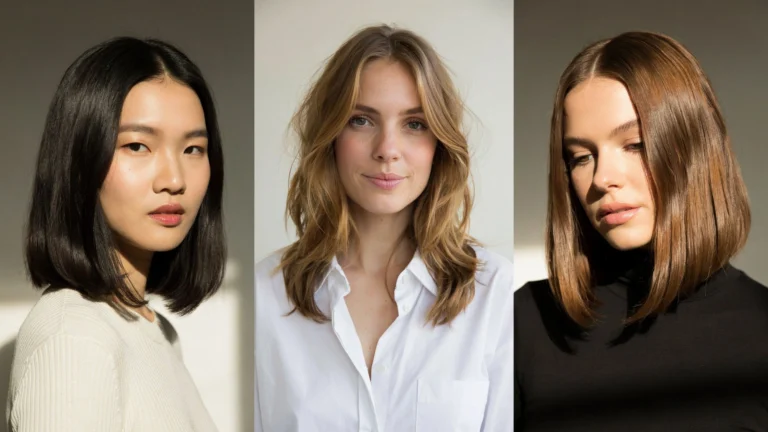
Not all bobs are equal when it comes to fine hair. A blunt, one-length bob actually drags fine strands down and makes the hair look thinner at the ends. A textured, piece-y bob cut slightly shorter at the nape and with soft internal layering at the front gives fine hair an edge to grip onto as it dries.
This particular shape works especially well for oval and heart-shaped faces. It sits above the collarbone, which keeps the weight line high enough to fake density at the perimeter.
Shaggy Cut Is Not Just for Thick Hair
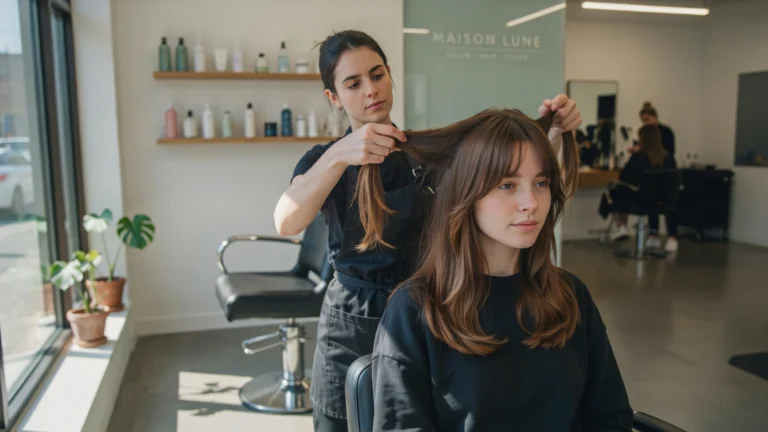
The shag has been misunderstood. Most women with fine hair hear “shag” and assume their hair is too thin to carry all that texture. The truth is that a shag built with soft, curtain-style fringe and light face-framing layers is one of the best wash-and-wear cuts for thinning hair. It creates movement that reads as fullness.
The key is keeping the layers long enough to blend naturally. Short choppy layers on fine hair can look stringy rather than textured, so a skilled stylist will cut them to land at cheekbone or chin length rather than shorter.
The French Bob and Why Fine Hair Loves It
The French bob, that chin-grazing, blunt-looking cut with full fringe, is having a long, well-deserved moment. It works beautifully for fine thinning hair because it keeps everything at a length where the hair still has body. Below the jaw, fine hair starts to lose its fight against gravity.
Women with round or square face shapes sometimes hesitate with this cut, but a slightly longer version that grazes the jawline rather than sitting above it softens the effect considerably. The fringe also draws the eye upward, toward the crown, which creates the visual impression of more volume overall.
What Pixie Cuts Actually Demand From Fine Hair
A pixie is often recommended as the default solution for thinning hair, and while it absolutely can work, it is not the effortless choice people assume it is. A pixie with too little texture at the top can lay flat, and with fine hair, there is nothing underneath to push it up. It needs volume built into the cut itself, usually through disconnected layers at the crown.
The soft, longer pixie, sometimes called a pixie-lob or a pixie with grown-out sides, tends to suit fine thinning hair better than a close-cropped version. There is more hair to work with during air-dry, which means more natural movement.
The Lob That Actually Holds Its Shape
The long bob, landing anywhere from just below the jaw to just above the collarbone, is probably the most versatile wash-and-wear cut available for fine hair when it is done correctly. The mistake most women make is asking for a lob and getting a one-length cut that sits heavy. What fine hair needs is a lob with interior texture, not wispy ends.
This means asking your stylist to point-cut through the ends rather than cutting straight across. It also means requesting that they remove weight from the interior rather than the surface, which preserves the appearance of density while still letting the cut move naturally on its own.
Face Shape and How It Should Guide Your Decision
If you have a longer face shape, a cut that adds width at the cheekbones is your friend. A textured bob or a shag with volume at the sides does this well without requiring you to actually blow-dry the sides out. Round faces tend to look best with cuts that have height at the crown rather than width at the jaw.
Fine thinning hair often thins most noticeably at the crown first. A cut that keeps some length and movement at the top, rather than cropping very close, can work with that area more sympathetically than cutting it short would.
The Seasonal Reality of Wash-and-Wear Styling
Summer humidity is the enemy of fine hair that relies on a cut to do the work. In warm months, fine strands absorb moisture from the air and go flatter faster. This is when a shorter wash-and-wear cut tends to shine, because there is simply less hair to go limp.
Winter is actually kinder to wash-and-wear styles on fine hair. Dry air keeps strands lighter, and a lob or textured bob holds its shape through an entire day without much effort. Knowing which length works best for your climate and adjusting seasonally, even just by an inch or two, makes the whole thing feel more manageable year-round.
What to Tell Your Stylist Before They Pick Up the Scissors
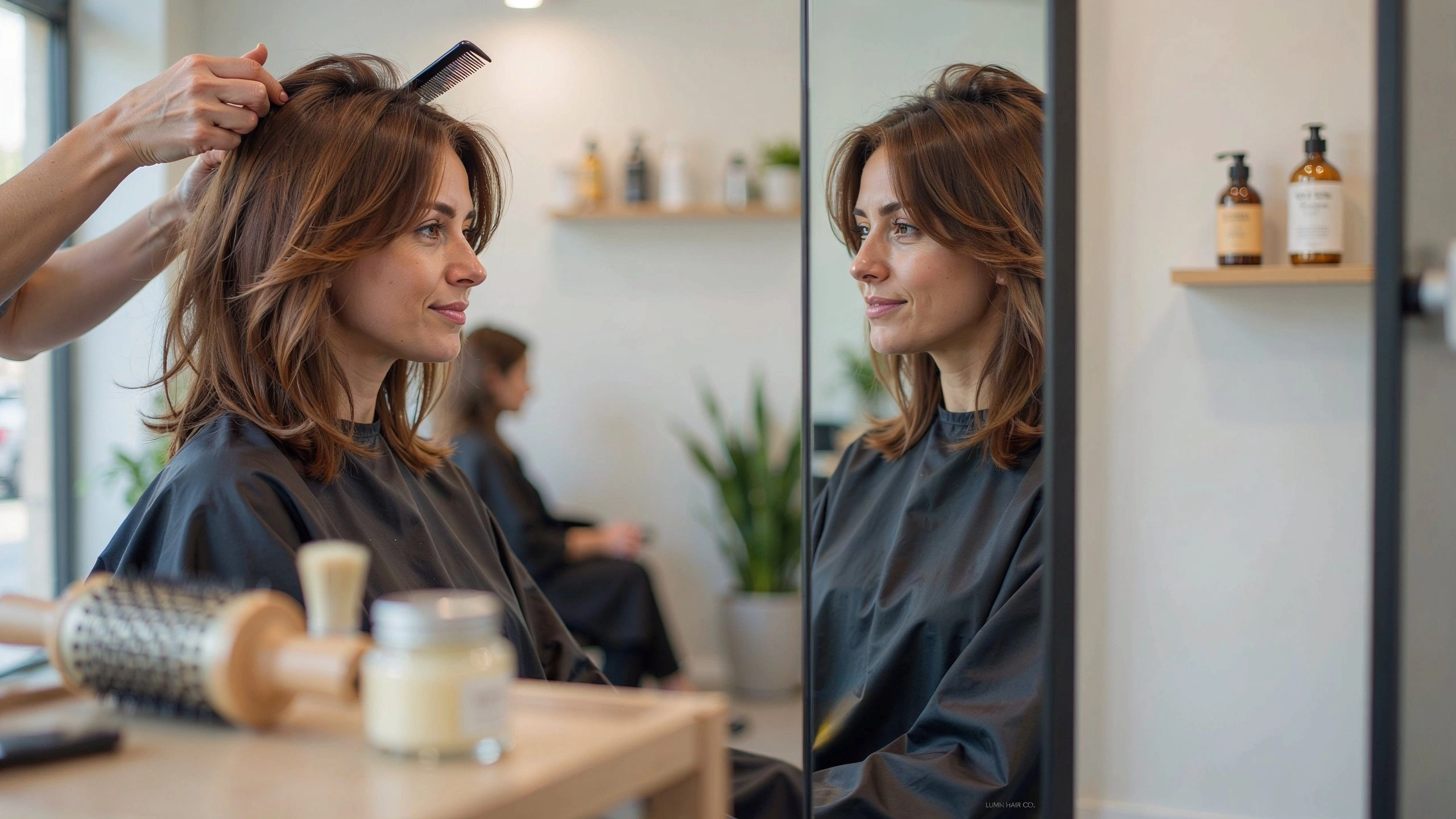
The most important thing you can communicate is that you want a cut that air-dries into its final shape. That phrase alone changes how a stylist approaches the cut. It signals that you are not relying on heat tools to finish the look, which means the cut itself has to do the heavy lifting.
Ask them to consider where the weight lands when your hair is dry, not wet. Fine hair behaves very differently once gravity and air have done their work, and a stylist who cuts with that in mind will give you something that actually performs on a real Tuesday morning, not just in the salon.
Maintenance and How Often You Really Need to Go Back
Wash-and-wear cuts on fine thinning hair tend to need more frequent trims than you might expect. Every six to eight weeks is realistic if you want the shape to keep doing its job. Fine hair loses its cut definition faster than thick hair, and once the weight line softens too much, the whole silhouette starts to feel shapeless.
This does not mean expensive appointments every few weeks. A simple trim to maintain the shape, without a full restyle, is quick and affordable. Keeping the ends clean is what maintains the illusion of fullness at the perimeter.
The Products That Complement a Good Cut
Even the best wash-and-wear cuts benefit from a minimal product routine. A lightweight volumizing mousse applied to damp roots before air-drying is usually all fine thinning hair needs. Heavy creams or oils weigh the strands down and counteract exactly what your cut is trying to do.
A rice water spray or a fine mist of sea salt spray can also add just enough texture for the air-dry to grip. The goal is not to add product; it is to give the hair just enough hold that it dries where you leave it.
Coloring Choices That Make the Cut Look Fuller
Dimension in color creates the visual illusion of thickness, which is why a single-process color on fine hair can sometimes make it look even thinner. Soft highlights or babylights placed around the face and through the mid-lengths catch light and break up the flatness that fine hair sometimes carries.
Warmer tones also tend to make fine hair look fuller than cooler ones, particularly in the mid-tones. Ashy blondes and cool brunettes are beautiful, but they can flatten fine strands in a way that golden tones simply do not.
At the end of the day, wash-and-wear cuts work because they meet your hair where it is. They are built around the reality of your texture, not a fantasy version of it. Finding the right one takes one honest conversation with a good stylist, and after that, your mornings get a lot quieter.