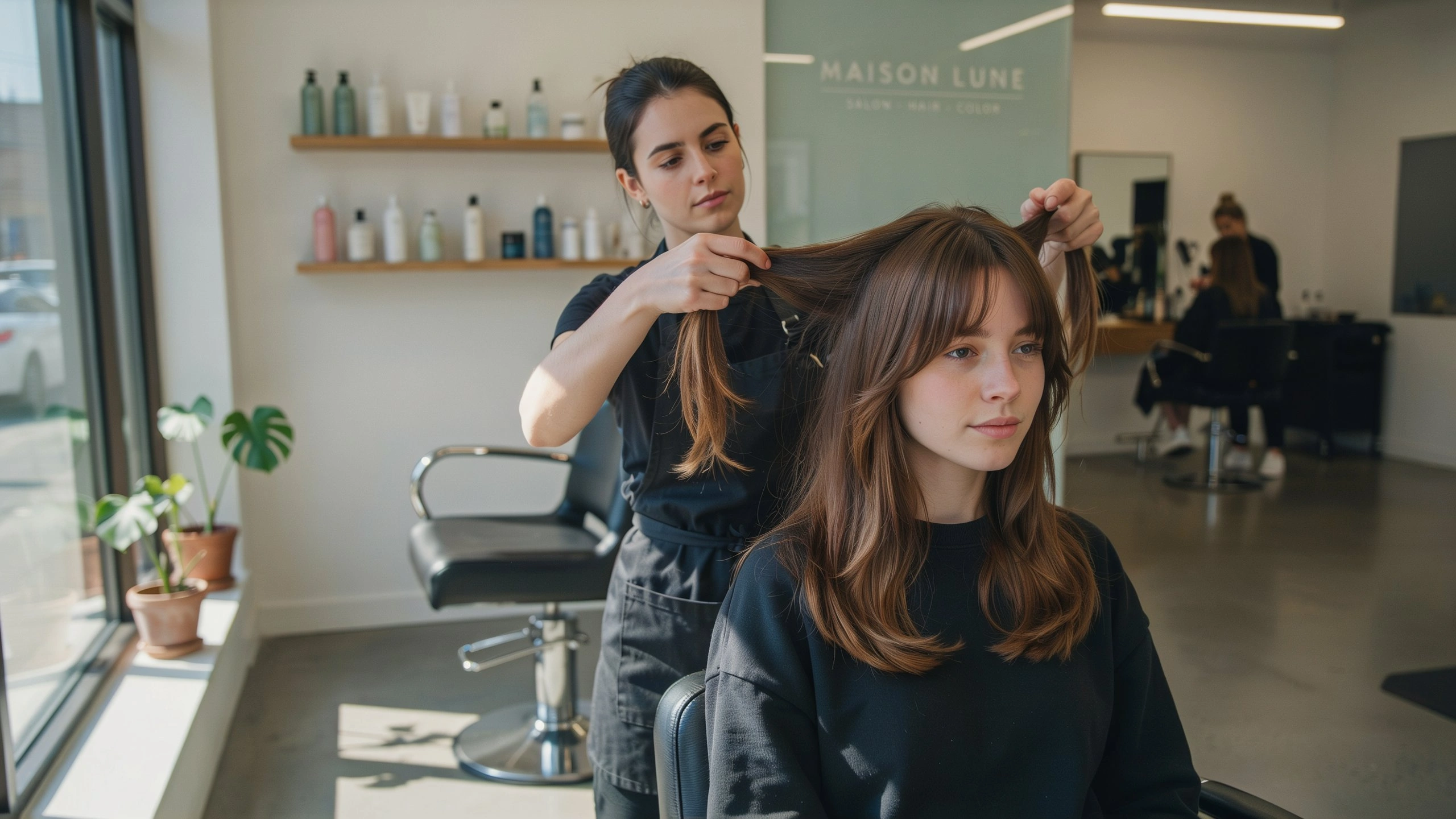
Butterfly Haircut – How to Ask for It and Style It at Home
You have probably seen it on your Pinterest feed more than once and felt that pull of recognition. The layers are soft and swooping, the volume is extraordinary, and the whole thing looks effortless in a way that makes you slightly suspicious. That cut has a name. The butterfly haircut has been quietly taking over for good reason, and once you understand what it actually is, you will see why it works so well on so many different women.
What the Butterfly Haircut Actually Is
The name comes from the shape the hair creates when the layers are separated and styled outward. Short, voluminous layers at the crown fan out like wings, while longer lengths underneath stay intact, creating that dramatic two-tier effect. It is sculptural without being stiff, and that combination is genuinely rare in a haircut.
The cut is not new in the way trends are new. It borrows heavily from the feathered styles of the seventies and the voluminous layers of the nineties, then strips away anything that felt dated, leaving behind something that reads as current without trying too hard. That lineage is part of why it photographs so well.
Why the volume works differently here
Most layered cuts distribute volume fairly evenly throughout the hair. This one concentrates it deliberately at the crown and mid-lengths, which is where most women actually want lift and movement. The result feels intentional rather than accidental.
The shorter layers at the top also do something practical: they support the hair around the face and prevent it from going flat by midday. If you have fine or medium hair that typically loses volume after a few hours, this structural approach to layering makes a real difference.
The silhouette that makes it recognizable
From behind, the butterfly haircut creates a distinct curved shape, fuller through the upper half and tapering toward the ends. It is that contrast between the upper volume and the longer underlayer that gives it its signature look. You can spot it across a room.
From the front, the shorter layers frame the face without becoming a fringe. They fall forward softly when the hair is down, sitting somewhere between a curtain bang and a full layer, which gives the face a softness that blunt or non-layered cuts simply cannot offer.
Who it genuinely suits
Oval and heart-shaped faces get an almost unfairly good result from this cut, because the volume at the crown balances the face shape naturally. But round and square faces benefit too, provided the layers are styled with height rather than width. The key is in how the stylist positions the shortest layers.
Fine to medium hair types tend to see the most dramatic improvement with this cut, because the removal of weight through the layers allows the hair to lift and move freely. Very thick or coarse hair can absolutely wear this style, but it requires more precise thinning to prevent the top layers from sitting too heavily.
How to actually ask for it in the salon
Walking in and saying “butterfly haircut” is a reasonable start, but bringing two or three reference photos is still the most reliable approach. Stylists interpret names differently, and a photo confirms you are both imagining the same thing. Choose images where the hair texture is similar to yours.
The specific language that helps: ask for short, face-framing layers starting around the cheekbone, with longer layers continuing through the mid-lengths, and the underlayer kept relatively long and intact. That description, combined with a photo, gives your stylist everything they need.
What to tell your stylist about the layers
The length of the shortest layer is the most important decision in this cut. Too short and it reads as a shag or a wolf cut; too long and the butterfly effect disappears into a generic layered style. Most women find that the shortest layer landing between the cheekbone and the chin is the sweet spot.
Ask your stylist to point-cut the ends of each layer rather than cutting them bluntly. Point cutting creates that soft, feathered edge that makes the layers blend into each other rather than sitting in visible steps. It is the difference between looking intentional and looking like the layers were simply chopped in.
The difference between this and a wolf cut
The wolf cut and the butterfly haircut get conflated constantly, and they are genuinely different in structure. A wolf cut is typically heavier at the root and has a more disheveled, rock-adjacent energy, while the butterfly version prioritizes a cleaner, more polished kind of volume. Both are layered, but the intention is different.
If you loved the idea of a wolf cut but wanted something that works for professional settings or feels slightly more refined, the butterfly version is almost always the better fit. It carries the same volume without the intentionally undone quality that makes some women feel uncomfortable wearing a wolf cut daily.
Styling it at home on straight hair
Straight hair requires a little more effort to coax into the full butterfly effect, but the result is completely achievable with the right tools. A round brush and a blow-dryer are your main instruments: work in sections, rolling the brush under and outward as you dry each layer from root to end.
Finish with a light-hold volumizing spray like Living Proof Full Dry Volume Blast and flip your head upside down briefly while the product sets. When you flip back up, the layers will have separated and lifted in exactly the right direction, giving you that fanned-out shape without any product stiffness.
Styling it on wavy or naturally textured hair
Wavy hair and this cut are a natural partnership. The wave pattern creates automatic separation between the layers, which means the butterfly shape appears with very little effort from you. A diffuser on low heat enhances the texture without disturbing the natural pattern.
Apply a curl-enhancing cream like Ouai Wave Spray to damp hair before diffusing, concentrating it through the mid-lengths and top layers. The cream adds definition without weight, which keeps the shorter layers lifted and distinct rather than clumped or flattened.
The products that make the biggest difference
Volume is the whole point of this cut, so the products you use either support that goal or work against it. Heavy creams, thick serums, and oil-based finishers applied to the roots will collapse the layers before the morning is over. Keep anything heavy to the ends only.
A lightweight mousse applied to damp roots before blow-drying is one of the most underrated tools for this style. Not Your Mother’s Curl Talk Mousse works on straight hair too, not just curly, and it gives the root area a grip that holds volume throughout the day without crunch.
How to sleep without destroying it
The butterfly haircut is volume-dependent, and sleeping on it without any protection tends to flatten the top layers by morning. A loose, high bun held with a scrunchie rather than a hair tie is the simplest overnight solution for medium to long versions of this cut.
If your hair is shorter or fine and a bun feels too tight, a silk pillowcase reduces friction significantly and preserves more of the shape than a cotton one. It sounds small, but the difference between a silk and cotton pillowcase on a styled cut is genuinely noticeable.
Trimming schedule and what happens as it grows
The butterfly haircut grows out in a forgiving way, which is one of its most practical qualities. The shortest layers gradually lengthen and begin to blend into the longer sections rather than creating awkward gaps or visible demarcation lines. Around four to five months in, most women find they have a slightly softer, more blended, layered style.
A trim every eight to ten weeks keeps the shortest layers at the right length to maintain the shape. If you want to preserve the defined butterfly effect rather than letting it evolve, ask your stylist to re-establish the shortest layer at each visit rather than simply trimming the ends.
How color interacts with this cut
Layers and color work together in a way that flatters both. Balayage or face-framing highlights in a butterfly haircut pick up on the structure of the layers, with the lighter pieces naturally appearing where the hair fans outward and catches light. The effect is dimensional without requiring precise placement.
If you are brunette, caramel or honey highlights concentrated through the top layers and around the face amplify the volume visually as well as adding warmth. Lighter sections reflect more light, and more light at the crown reads as more lift, even when the hair is sitting exactly as it normally would.
When this cut surprises you
Most women who get a butterfly haircut report the same experience: the first few days feel slightly unfamiliar, and then something clicks. Once you understand how the layers want to move and stop fighting them, the styling time drops significantly. It is one of those cuts that teaches you your own hair.
The other surprise is how well it holds through the day when it is cut correctly. A good butterfly cut has enough structure from the layering itself that even without products or heat styling, the shape is present. It just needs a little coaxing, not reinvention, every morning.
When a haircut starts working with your hair instead of requiring you to work against it, mornings get quieter, and mirrors become friendlier. That is the thing about finding the right cut. It does not feel like maintenance anymore. It just feels like you.