Choppy Layered Haircuts by Face Shape What Actually Flatters You
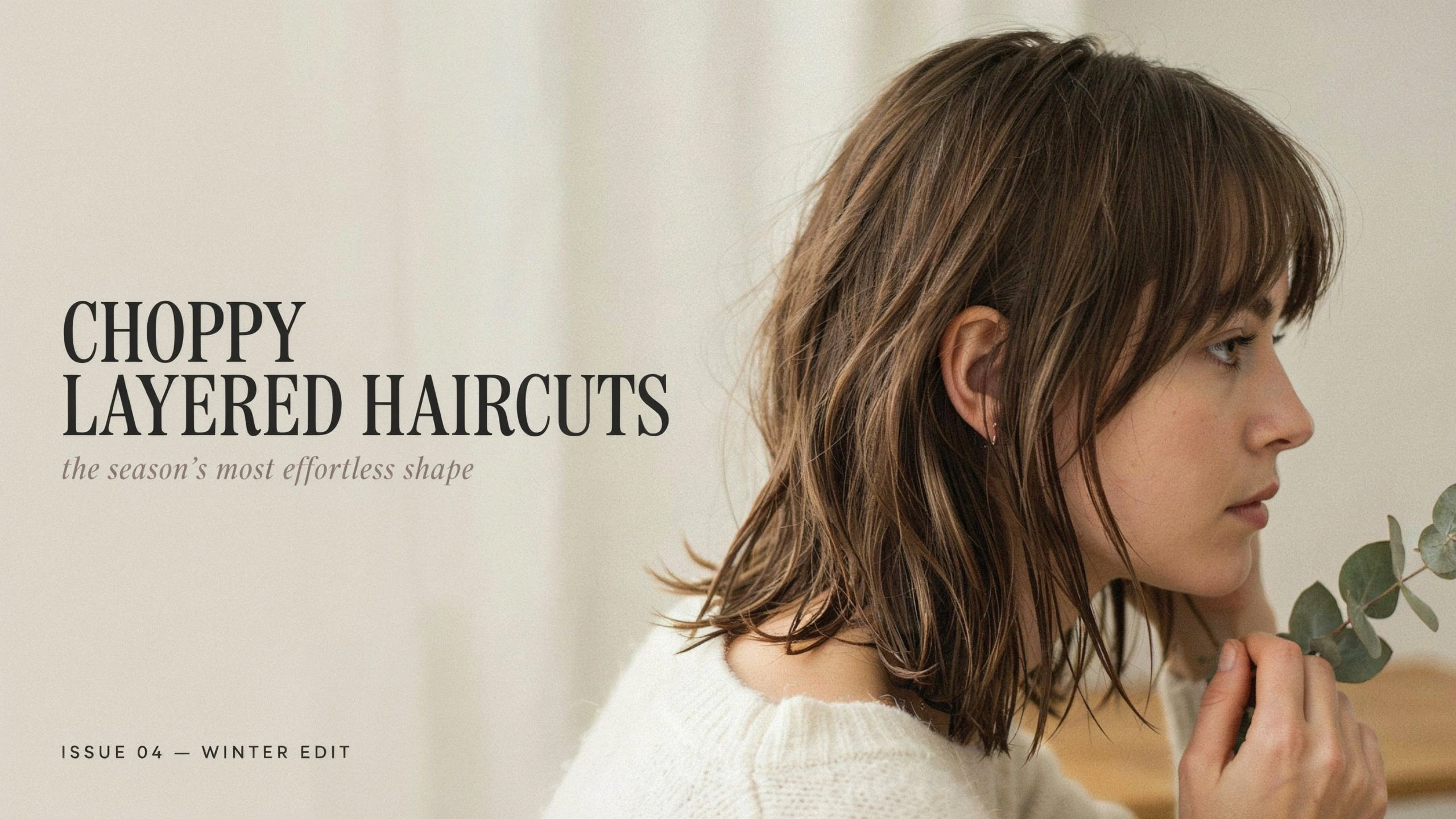
There is something quietly confident about a woman with choppy layered haircuts. Not in an obvious, trying too hard way. More like she figured out what her hair actually wanted to do, and then just let it.
If you have been scrolling Pinterest for cut inspiration and keep landing on the same category of looks, the ones with that broken, textured, slightly undone finish, you are probably already gravitating toward this style without knowing exactly what to call it. That is choppy layers. And if your hair has been feeling flat, one-dimensional, or stuck in a style that stopped exciting you two years ago, this might be the conversation you need to have with your stylist.
What Choppy Layers Actually Mean
Not all layers are choppy layers. That distinction matters more than people realize.
Traditional layers are cut in a smooth, blended graduation. The goal is a seamless transition from one length to the next, almost invisible to the eye. It looks polished. Controlled. A little predictable.
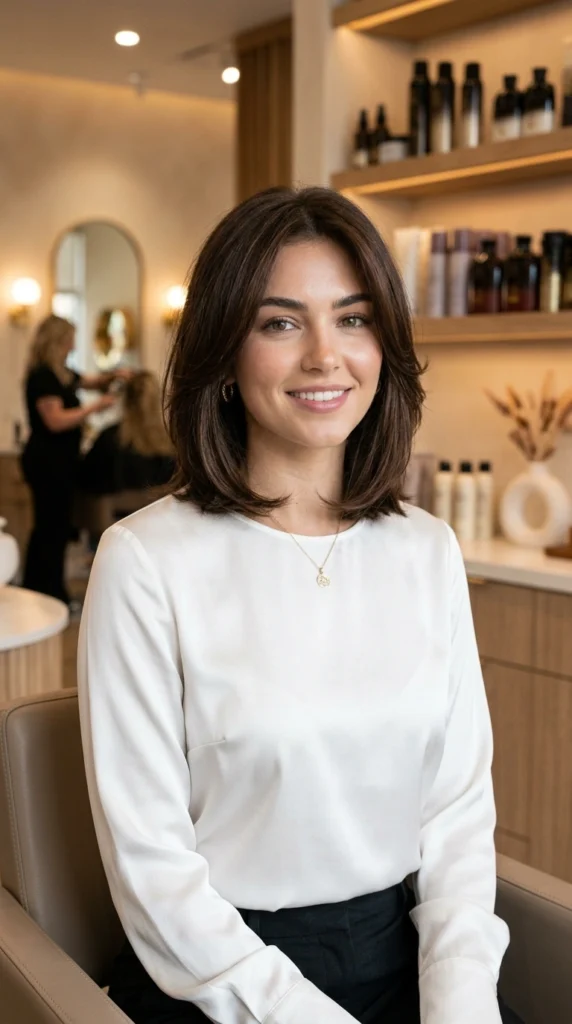
Choppy layered haircuts use a different cutting technique, typically involving point cutting, razor cutting, or a combination of both. Instead of soft blends, the ends are cut at irregular angles, which creates visible separation between sections of hair. You actually see the layers. The texture is intentional. The edges are not perfectly clean, and that is the whole point.
The result is a cut that looks like your hair has personality on its own, before product, before a styling session, almost before you have touched it. For women whose hair has always felt limp or too uniform, that shift can feel genuinely surprising.
The Hair Types That Respond Best
Here is where it helps to be honest with yourself, because choppy layers are not universally flattering in the same way on every texture.
Fine, straight hair actually benefits enormously from this cut. When your hair lies flat and close to the scalp, smooth layers can look almost invisible. Choppy layered haircuts introduce separation that reads as volume, even when no actual volume has been added. Your stylist is essentially creating the illusion of fullness through contrast rather than through bulk.
Wavy hair and choppy layers are a particularly good match. The layers give each wave a clear lane to move in, so instead of a heavy clump of wave, you get individual movement throughout the length. Women with 2A to 2C curl patterns often say this is the first cut that made their hair look intentional rather than just happening to them.
Thick, coarse hair can go either way. The choppy technique removes weight effectively and breaks up that dense, one piece quality that thick hair can have. But the cut needs to be done carefully. If your stylist goes too aggressive with the texturizing, especially at the ends, you risk a triangular shape or frizzier perimeter than you wanted. It is worth asking for a more conservative interpretation of the cut if you have dense hair and you are trying this for the first time.
Tightly coiled hair can work with choppy layers, though the conversation with your stylist needs to account for shrinkage and how the layers will behave in their natural state versus stretched. Many women with 4A and 4B hair find that layers add gorgeous definition when the hair is worn out, but the actual placement and number of layers matters more here than with straighter textures.
Face Shapes and Where the Layers Land
The version of choppy layered haircuts that flatters you depends a lot on where your layers start.
If you have a round face, you generally want layers that begin below the chin, so the weight and framing keep the face looking elongated rather than wider. Avoid heavy layers that cluster around the cheekbone level because they tend to add width at the widest point of a round face.
Oval faces are genuinely flexible. If your face is oval, you can experiment with higher layers that start at the crown, layers that begin mid-length, or long choppy layers that mostly live in the ends. Most variations will work. The cut itself is doing the styling work.
Square faces and strong jawlines actually pair well with choppy layered haircuts because the irregular, soft ends soften an angular jaw without trying to hide it. Curtain bangs paired with choppy layers are a particularly effective combination if your jawline is prominent, because the framing draws attention up and through.
Heart-shaped faces, wide at the forehead and narrow at the chin, benefit from choppiness at the ends. Having that extra visual texture at the length adds balance to the chin area without making it look heavy.
The Honest Maintenance Conversation
Choppy layered haircuts look effortlessly undone, but that does not mean they are no maintenance. It just means the maintenance is different from what a blunt cut requires.
The cut itself grows out relatively gracefully. Because the layers are already irregular, there is no hard line to grow out. You will not hit that awkward in between stage the same way you might with a perfectly even trim. That said, most women find they need to return to the salon every eight to twelve weeks to keep the texture from getting too heavy as growth fills in.
At home, the styling routine is more about technique than product, though product does matter. For straight and wavy hair, a small amount of texturizing paste or a lightweight pomade worked through damp ends before air drying creates the separation that makes choppy layers read as styled rather than just messy. A diffuser works particularly well if you want more movement without heat styling.
For heat styling, a 1.25 inch curling wand with a loose, varied wrap on different sections gives that not quite curled, not quite straight result that choppy layered haircuts tend to photograph so well. You are not curling uniformly. You are curling some pieces under, some away, leaving some almost straight. The imperfection is the finish you are going for.
One thing worth knowing choppy layers on hair that is on the drier side need a bit more moisture management than smooth, blunt cuts. The point cut or razor cut ends can feel slightly more prone to dryness because more surface area of the hair strand is exposed. A weekly deep conditioning treatment or a leave in applied to the ends keeps the texture looking intentional rather than damaged.
Variations Worth Knowing Before Your Appointment
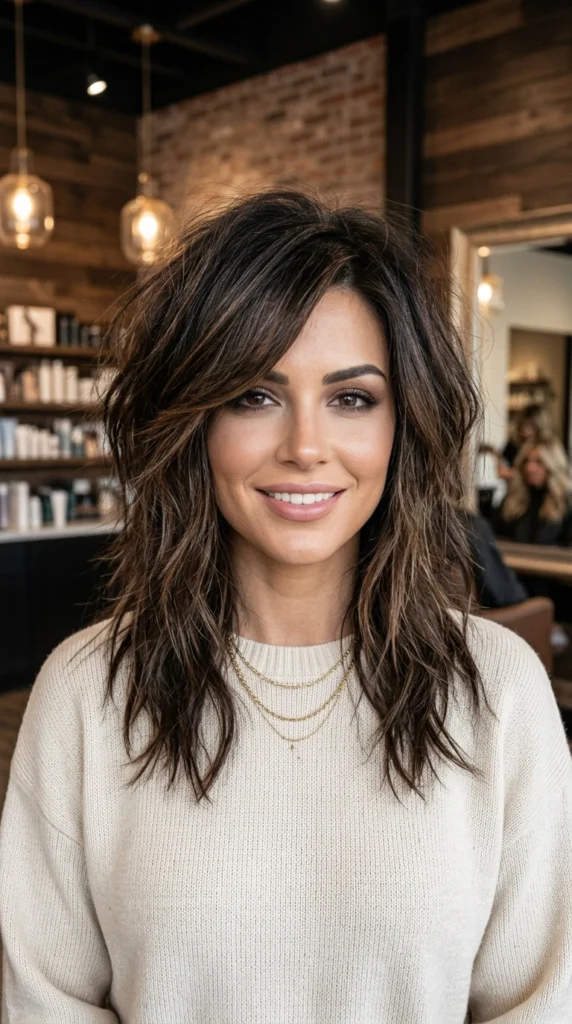
Choppy layered haircuts are not one single look. There is a range, and knowing the variations helps you communicate clearly at the salon.
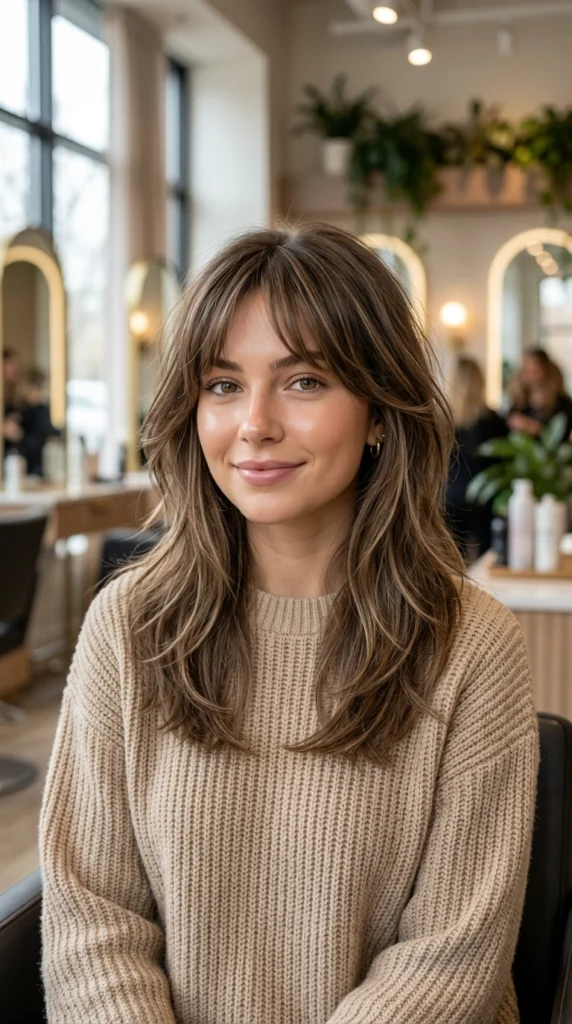
Long choppy layers maintain most of the length while adding texture through the mid shaft and ends. This works beautifully on women who want movement and a more modern finish without giving up their length. Think long hair that moves rather than hangs.
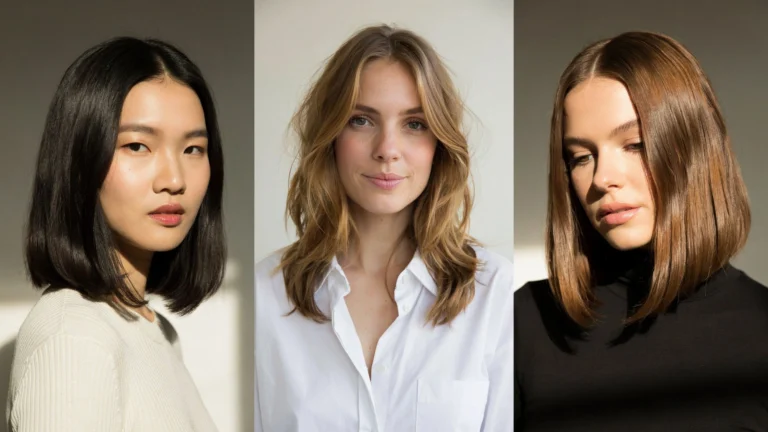
Medium choppy layers, usually falling between the collarbone and shoulder, are probably the most common version you will find on Pinterest right now. The length is manageable, the layers are visible, and it suits most face shapes without needing much adjustment.
The shag haircut is the most dramatic version of choppy layered haircuts. It typically includes curtain bangs, heavy layering from the crown down, and a lot of texture at the perimeter. The 70s shag that has come back in various forms over the last few years falls into this category. It is a bigger commitment because the layers are more structural and the silhouette is more defined.
The wolf cut sits somewhere between a shag and a standard choppy layer cut. It borrows the crown layering of a mullet influenced shape with the texture of a shag. If you have seen it everywhere, that is because it genuinely works across a wide range of hair types and lengths.
What to Tell Your Stylist
The clearest way to communicate this cut is to bring photos, but also to say specifically what you are trying to fix about your current hair. I want more texture in the ends or I want my layers to actually show or my hair feels too heavy and solid are useful starting points.
Ask your stylist whether they prefer point cutting or a razor for this look, and whether they think one technique suits your texture better than the other. Not every stylist uses a razor, and that is fine. Point cutting can achieve similar results and tends to be gentler on finer hair.
If you are nervous about going too choppy, ask for a more blended version the first time. You can always go more textured at your next appointment. It is much harder to reverse a very aggressive choppy cut if you end up not loving how it interacts with your specific texture in real life.