Red Hair Color Ideas and Shades Finding the One That Actually Suits You
There is something about red hair that stops people mid scroll. It has always been that way. Whether it is a deep burgundy on someone walking through a coffee shop or a bright copper catching the afternoon light, red reads as a choice. A deliberate, confident, you knew exactly what you were doing choice. And if you have been sitting with the idea of going red for a while now, you are probably not short on red hair color ideas. You are short on clarity. Which red? For your skin tone? Your lifestyle? Your willingness to touch up every six weeks?
That is what this is really about. Not just the pretty shades, but the practical reality of living with red hair and choosing the version that was made for you.
Why Red Hair Color Is More Personal Than Any Other Shade

Most color families give you a little wiggle room. Blonde works on a lot of people. Brown is almost universally flattering. But red is the one shade that truly responds to your undertones, your natural hair color, and the amount of maintenance you are actually willing to commit to. Get it right and it looks like it was always yours. Get it slightly wrong and it can wash you out or clash in a way that is hard to pinpoint but impossible to ignore.
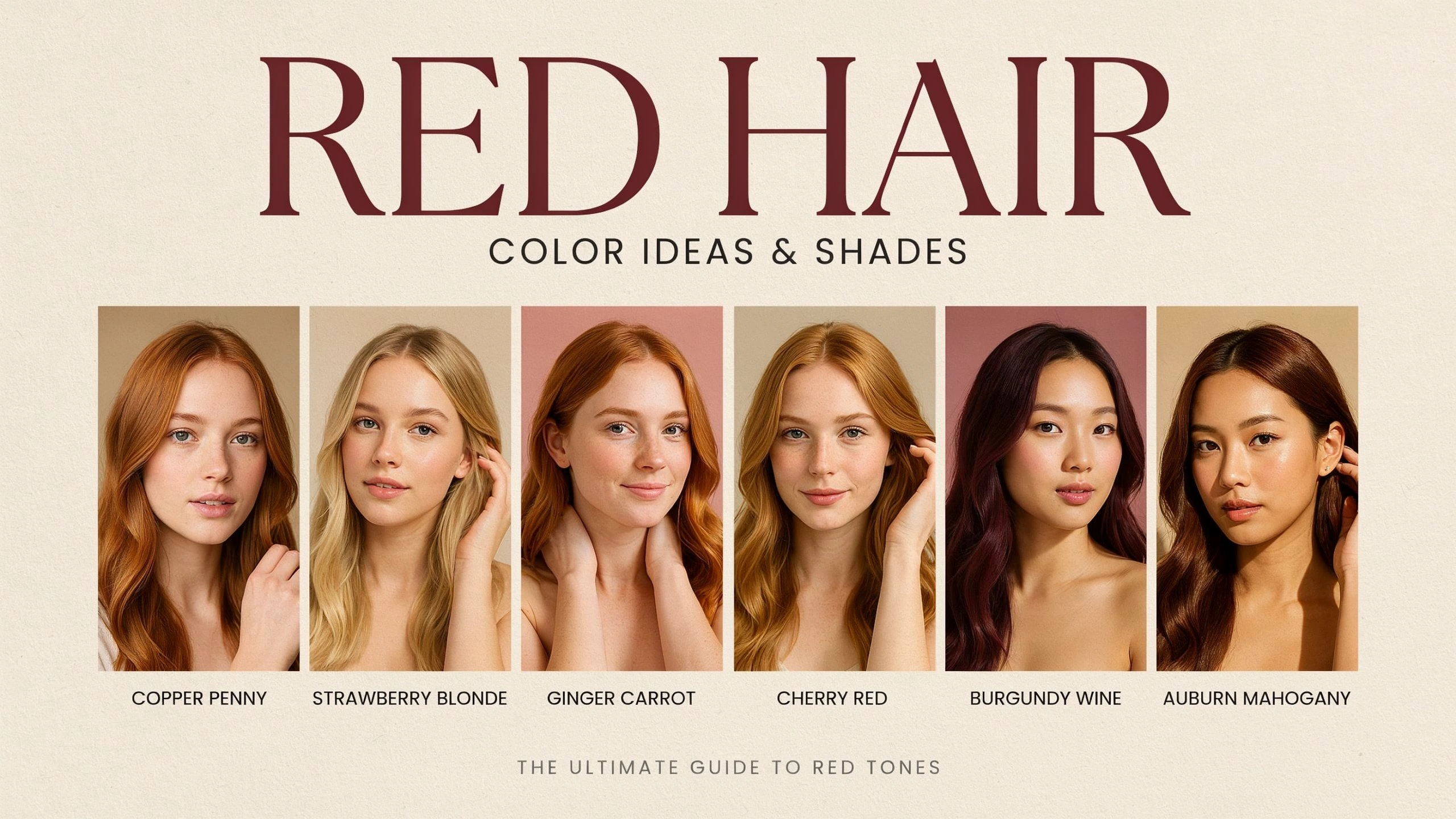
The good news is that red hair color ideas exist across such a wide spectrum that there is genuinely something in this family for almost everyone. The range runs from pale strawberry blonde, through warm copper and classic auburn, into deep mahogany and rich cherry, all the way to vivid fire engine red. Those are not just aesthetic differences. They are completely different experiences in terms of how they interact with your complexion, how quickly they fade, and how much work they ask of you every four to eight weeks.
The Warm Reds Copper, Auburn, and Everything In Between
Copper is having a moment that does not seem to want to end, and honestly it earns it. A true copper sits at the intersection of orange and red with a golden shimmer underneath, and it is the most flattering of all the red hair shades for women with warm or olive undertones. If your skin leans yellow or peachy rather than pink, copper will make your complexion glow in a way that other colors simply do not.
Auburn is the shade most women think of when they say they want to look like they could be naturally red. It reads darker than copper, closer to a rich red brown, and it sits beautifully on medium skin tones with either warm or neutral undertones. Auburn is also forgiving in terms of grow out. Because it blends brown and red, the roots do not announce themselves the moment they appear. This makes it one of the more practical red hair color ideas for women who are new to coloring or who cannot get to a salon as often as they would like.
Strawberry blonde deserves its own mention here because it sits at the lightest end of the red family and is often overlooked in favor of more dramatic shades. But for fair skinned women with cool or neutral undertones and naturally light hair, strawberry blonde is incredibly flattering. It adds warmth and dimension without the stark contrast that a deeper red can create against very pale skin.
The Cool Reds Cherry, Burgundy, and Plum Adjacent Shades
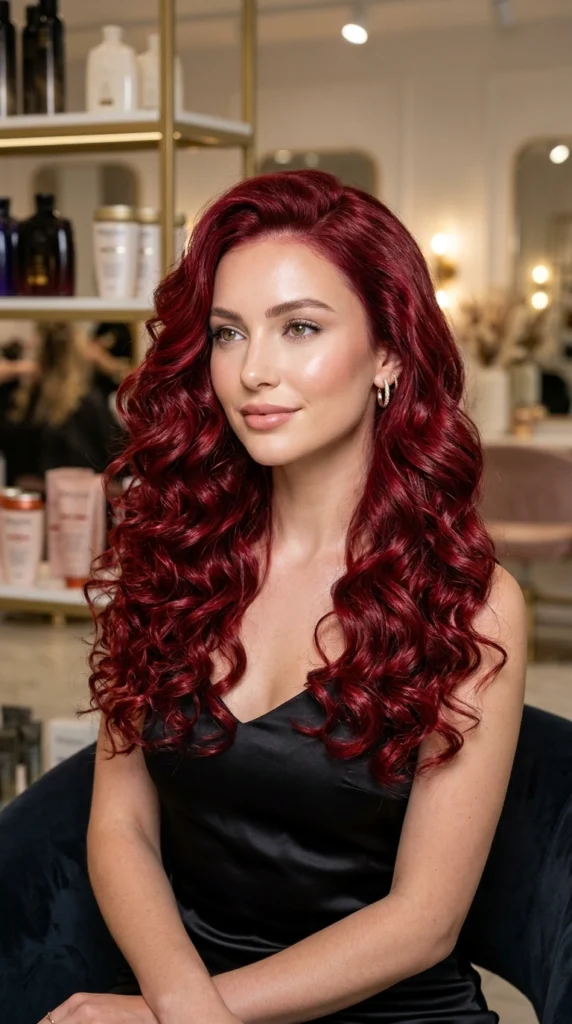
If warm reds are the sun, cool reds are candlelight in a dark room. Cherry red, burgundy, and any shade that has a blue or violet base rather than an orange one will suit you best if your skin has pink or rosy undertones, or if you have a fair, cool complexion that tends to look washed out by too much warmth.
Burgundy is a particularly rich choice for the autumn and winter months. It sits right at the edge of the red family, pulling toward wine and plum, and it reads as sophisticated rather than bold. Women with deep skin tones often look extraordinary in burgundy because the contrast creates this kind of jewel toned effect that genuinely does not work in the same way on lighter complexions. If you have deeper skin, burgundy and red violet shades are genuinely worth putting at the top of your list of red hair color ideas to explore with your colorist.
Cherry red is brighter and more saturated than burgundy. It has a blue undertone but it is still unmistakably red. Think old Hollywood. Think that deep, glossy red that photographs beautifully and stands out in every room. The reality of cherry red, though, is that it fades faster than almost any other shade in the red family. Red pigment molecules are small, which means they exit the hair shaft relatively quickly, and the more vivid and saturated the shade, the more noticeable that fade becomes. If cherry red is calling to you, you need to be honest with yourself about whether you will use a color depositing shampoo, stay out of chlorine, and protect your hair from UV exposure. All of those things matter a lot with this shade.
What Your Natural Hair Color Actually Means for Going Red
This is the part that gets skipped over in most inspiration content, and it really should not. Your natural hair color is not just a starting point. It is the foundation that determines which reds are achievable without major damage, which require bleaching, and which will fade in ways that are flattering versus unflattering.
If your hair is naturally light, a medium blonde or lighter, the warm copper and strawberry blonde shades are within reach without bleach. A colorist can deposit the red tone over your existing base and the result is rich, believable, and relatively low damage.
If your hair is naturally dark brown or black, going red gets more complicated. To achieve a true copper or cherry, you typically need to lift the natural pigment first. That means bleach, and it means a few sessions in the chair, and it means your hair needs to be in good condition going in. The red hair color ideas that work best for naturally dark hair without bleaching are the deeper ones: auburn, mahogany, and burgundy. These shades are dark enough to show up as a noticeable shift from your natural color without requiring a full lightening process. Your colorist might use a technique called glossing or toning over a preliminary lift, but it does not need to be dramatic to be beautiful.
The Maintenance Conversation Nobody Wants to Have
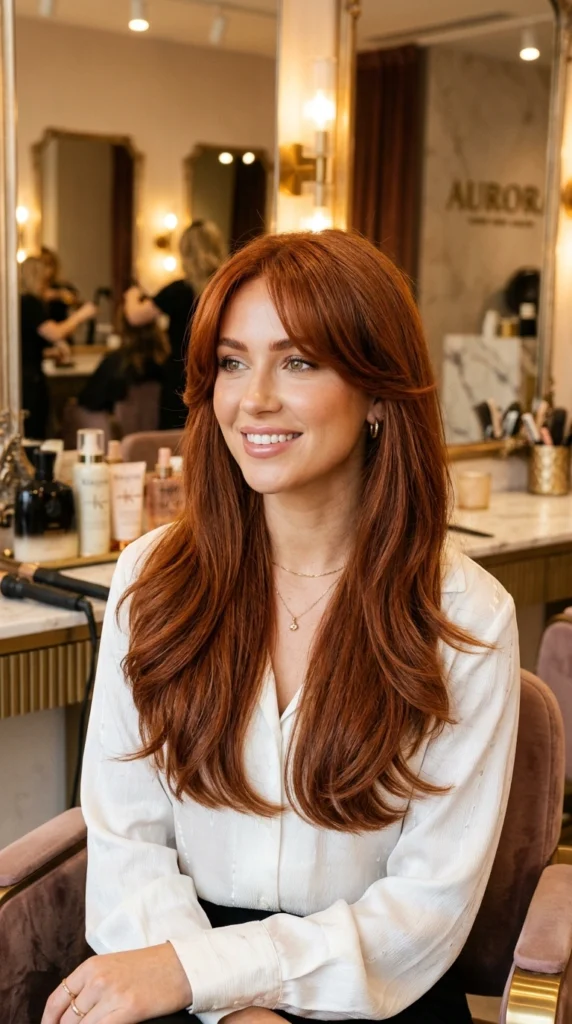
Red fades. This is not a flaw of red hair, it is just the chemistry of how red pigment behaves in the hair shaft compared to other colors. If you are planning to go red, build the maintenance into your expectations from day one rather than being surprised by it.
The actual frequency of your root touch ups depends on which shade you choose. A bright or vivid red will need attention every four to six weeks. An auburn or mahogany that closely mirrors your natural base can stretch to eight or even ten weeks before the grow out becomes obvious. For copper somewhere in the middle of the spectrum, most women find six to eight weeks feels right before they want to refresh the tone.
Between appointments, a color depositing conditioner or shampoo in a red or copper tone makes a genuine difference. These products deposit a small amount of pigment each time you use them, which slows the fade and keeps the color looking intentional rather than tired. Using them once or twice a week rather than replacing your regular shampoo entirely tends to give you the most control over how much color they add.
Washing your hair less frequently also helps. Heat and water are both enemies of red pigment. Letting your hair air dry when you can, washing in cool water, and wearing a hat in direct sun during summer all add up over time to a color that stays vibrant noticeably longer.
How Face Shape Plays Into This
Face shape does not limit your color options, but it does inform how the placement of lighter and darker tones around your face can work for you. If you have a round face, placing slightly deeper, more saturated red tones at the temples and a warmer, brighter copper through the lengths creates a lengthening effect. If you have a longer or more angular face shape, the opposite works well. Warmer, brighter tones at the front and through the fringe area create the illusion of width and softness.
This is where balayage and highlights within the red family really earn their place. A single, flat red color can look beautiful, but adding dimension through hand painted lighter and darker tones creates movement, depth, and a result that flatters face shape in a way that flat color simply cannot.
Finding Your Shade Without Starting From Scratch
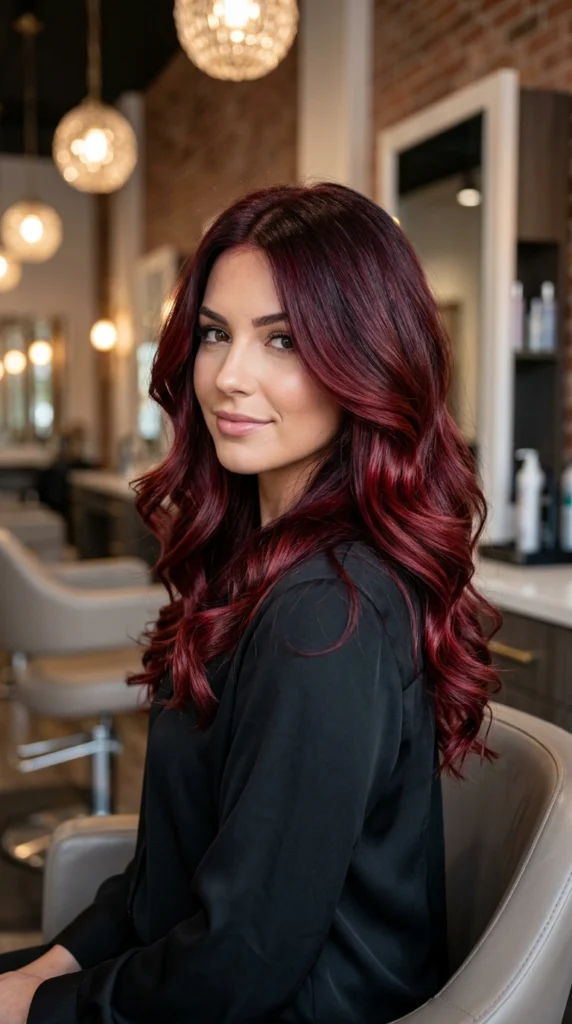
If you are not sure which direction within the red family suits you, the easiest starting point is to look at your natural brow color and the warmth in your skin after a bit of sun. Women who tan easily and have naturally warm toned brows tend to thrive in the copper and auburn range. Women who burn rather than tan, have visible pink in their cheeks, or have naturally ash or cool toned brows tend to look best in the cherry, burgundy, and cooler red range.
Saving images from Pinterest and bringing them to your appointment is genuinely useful, not because your colorist will replicate them exactly, but because they show your eye more accurately than words do. You might describe a shade as dark red and mean two completely different things from what your colorist pictures. Images close that gap.