Short Curly Hairstyles That Actually Suit Your Face Shape
There is a specific kind of frustration that comes from staring at your curls in the bathroom mirror at 7 a.m., knowing they have potential but not quite knowing what to do with them. You have probably saved enough short curly hairstyles on Pinterest to fill a scrapbook. You may have even tried a few. Some worked. Most did not, at least not the way they looked on someone else’s hair.
That gap between inspiration and reality is what this is actually about.
Short curly hairstyles have had a long and complicated relationship with mainstream beauty culture. For decades, the default advice was to straighten, stretch, or otherwise tame curls into something manageable. That word alone says a lot. Now, thankfully, the conversation has shifted, and more women are cutting their hair short specifically to let their curl pattern do what it naturally wants to do. The results, when done right, are genuinely stunning. But getting there takes more than a good reference photo.
Why Cutting Curly Hair Short Is a Completely Different Decision Than Cutting Straight Hair

If you have ever made an appointment at a salon, shown your stylist a photo of a sleek short bob, and walked out with something that looked nothing like it, you already understand this instinctively. Curly hair does not behave the same way straight hair does when you cut it. Every inch you remove changes the spring factor, the volume distribution, and the overall shape in ways that are not always predictable until the hair is dry.
This is why curl specific stylists talk about dry cutting so much. Cutting curls while they are dry, in their natural state, allows a stylist to see exactly where the hair falls and how much length the curl is actually eating up. A curl that stretches to your chin might spring back to sit just below your ear once it is released. That shift matters enormously when you are planning a short style.
The other thing worth knowing is that your curl pattern may change when you go shorter. Some women find that removing length actually tightens their curl because there is less weight pulling it down. Others discover looser, wavier pieces they never saw before because those sections were always hidden underneath longer layers. Neither outcome is bad. But it helps to be prepared for a little surprise.
The Shapes That Work Best for Different Face Structures
Short curly hairstyles are not one size fits all, and that is not a criticism, it is actually the best part. There is a shape for almost every face structure once you understand the basic principles.
If you have a round face, you generally want height and definition at the crown rather than volume at the sides. A tapered cut that is shorter at the nape and fuller at the top creates vertical length that softens the roundness without fighting it. The key is keeping the sides close while letting your natural curl pattern build upward rather than outward.
For oval and long faces, width is your friend. A fuller, more rounded silhouette, something that sits wide at the cheekbones rather than elongating downward, tends to be incredibly flattering. This is where the classic curly pixie or a rounded curly bob really shines. The hair does the work of broadening the midface, which creates balance without any products or tricks needed.
Square jaw lines respond well to softness. The harder lines of a strong jaw are actually complemented beautifully by the organic, unpredictable quality of natural curls, especially if you keep some length at the chin or let a few pieces fall forward. A layered curly cut with movement around the face tends to look effortless rather than structured, and that ease is exactly what softens a square shape.
Heart-shaped faces have wide foreheads and narrower chins, so the goal is usually to balance that proportion. Fuller styles around the jaw and chin area, rather than lots of height on top, help here. A chin length curly cut with minimal layers works well, as does a curly bob that is slightly longer in the front than the back.
The Cuts That Keep Coming Up for Good Reason

There are a handful of short curly hairstyles that have been popular for years because they are genuinely versatile and tend to look good across a wide range of curl types. Not every trendy cut survives actual daily life, but these ones do.
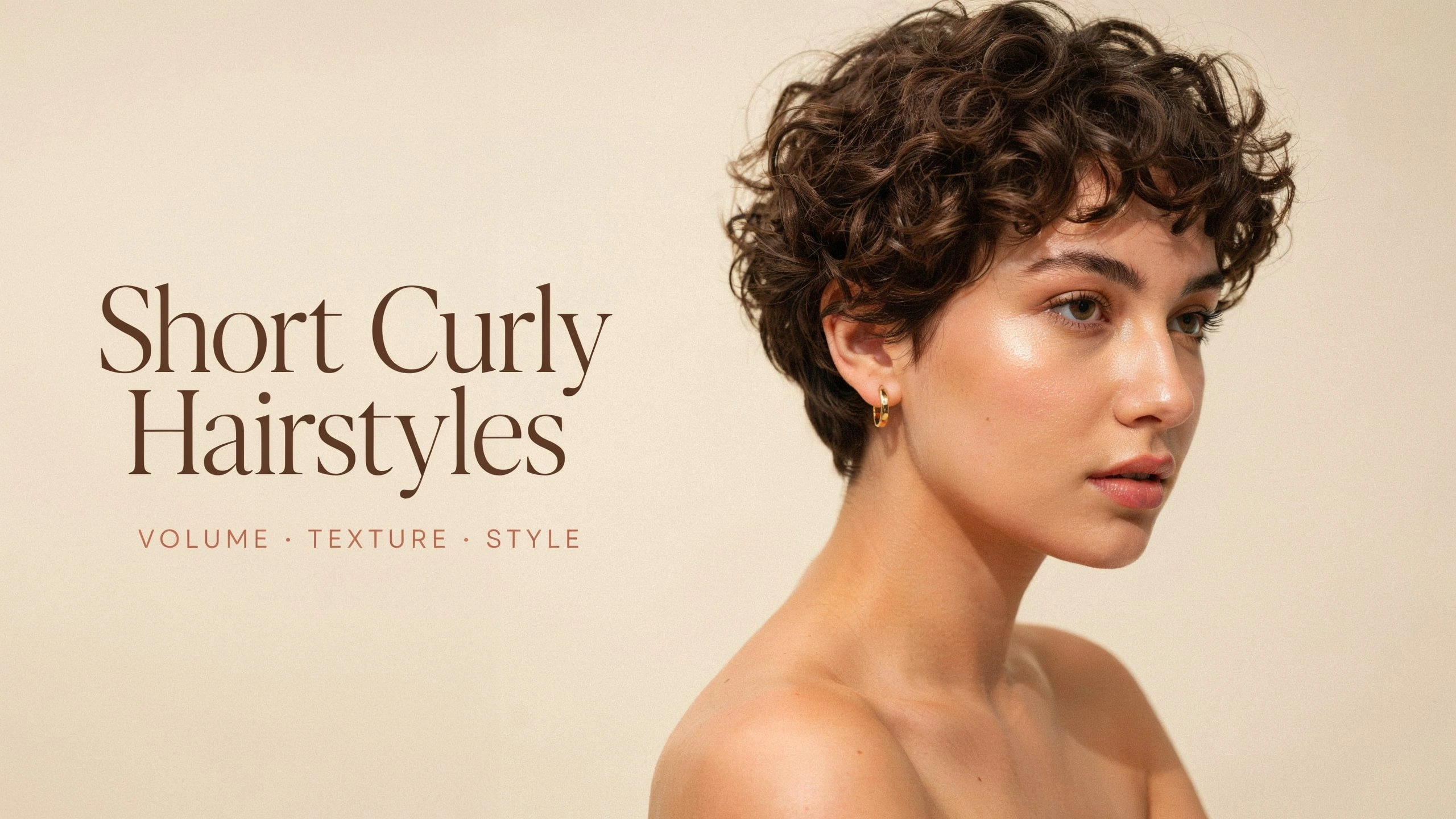
The curly pixie cut has gone through many versions, but the ones that tend to work best are the ones that respect the curl rather than trying to sculpt it into something overly precise. A loose, textured pixie with longer sections on top and a tight nape is probably the most wearable version. It grows out gracefully, it works on 2C waves and 4B coils alike with the right cut technique, and it requires almost no styling time once you have your routine down.
The wash and go friendly short cut, sometimes called a tapered natural or a curly tapered cut, is particularly popular for women with tighter curl patterns in the 4A to 4C range. The sides and back are cut very close, either with clippers or very precise scissors, while the top is left longer to allow the curl pattern to show. When you define those coils with a gel or a curl cream, the contrast between the close sides and the full crown is genuinely striking.
Then there is the curly lob, which sits right at the edge of short and medium but tends to behave like a short style because of how curls compress length. A curly lob that would hit your collarbone when wet often dries to sit right at the jaw. This is one of the most beginner friendly options for women who want to try short hair but are not ready to fully commit. It gives you room to pull back the occasional frustrating hair day while still looking intentional and finished.
Maintenance Realities Nobody Talks About Enough
There is a version of the short curly hair conversation that skips over the actual upkeep, and that is a disservice. Going short with curly hair is not a low-maintenance choice in the way that some people assume. In some ways, short curly styles require more attention, not less.
Trims need to happen more frequently. When your hair is long, you can stretch a trim to every three or four months and the shape will survive reasonably well. Short curly hair tends to lose its shape faster. The nape especially, if you have a tapered cut, can start looking ragged within six to eight weeks. Most women who wear short curly styles comfortably budget for a trim every six to ten weeks, which adds up over a year.
Product routines often need to be more precise. With longer curly hair, you have more margin for error. If you apply too much product to long hair, it eventually dries and you can break it up with your fingers. On a short style, product heaviness shows immediately and tends to make the hair look weighted down or greasy rather than defined. Finding the right amount of cream or gel for your specific texture, usually somewhere between a nickel and a quarter sized amount, takes some experimentation.
Humidity response also changes. Short curls can puff out in humid conditions in ways that longer curls do not because there is no weight to anchor them. This is not always a negative, but if you live somewhere like the American South during summer or a coastal city with persistent ocean air, it is something to account for. A light hold gel applied to damp hair and left completely alone while drying tends to help more than anything else.
How Seasonal Changes Affect Short Curly Hair
This is the part that surprised a lot of women who make the switch. Your short curly hair will not look the same in January as it does in July, and understanding why helps you stop blaming yourself or your stylist when the shape shifts.
In winter, lower humidity means curls often loosen slightly and lose some of their defined spring. Hair also tends to experience more static and frizz from hats, scarves, and dry indoor heat. A slightly heavier leave-in conditioner during the colder months can restore some of that definition and protect the cuticle from the constant friction of winter accessories. Silk lined hats are worth the price if you wear them often.
In summer, the opposite can happen. Humidity amplifies the curl, which is wonderful if your curl pattern is on the looser end and you want more definition. For tighter curl types, summer humidity can sometimes cause the hair to expand outward more than upward, which changes the silhouette of your cut. Light gels that hold without crunch tend to give you the most control without fighting the weather entirely.
Spring and fall transitions are often the most unpredictable, simply because the humidity fluctuates. The best approach during these seasons is to keep your routine flexible and have two or three go-to options depending on what the day brings, whether that is a wash-and-go with gel for a humid morning or a simple moisturize-and-scrunch for a dry one.
Finding the Right Stylist for Short Curly Hair
This matters more than almost anything else, and it is worth stating plainly. Not every talented stylist is trained to cut curly hair well. And a great cut on straight hair absolutely does not translate to great results on textured hair.
When you are looking for someone to trust with short curly hairstyles, ask specifically about their experience with your curl type. Look at their portfolio on Instagram or in their salon book, not just for curly hair generally, but for short curly hair. Many stylists are comfortable with long curly cuts and much less confident with short ones. Ask whether they cut curly hair dry or wet and why, because the answer tells you a lot about how they were trained. Ask what their approach to layering curly hair is. If they look uncertain or give you a vague answer, that is useful information.
It may take trying two or three stylists before you find one who really gets your hair. That is normal. It can feel frustrating and expensive, but the right stylist changes everything. Once you find them, they become almost irreplaceable.
Short curly hairstyles have a specific kind of magic when they work. They make your face more visible, your features more present. There is something about hair that sits close to the head that draws attention directly to the person wearing it. That is not a small thing. It is worth taking the time to find the version that actually fits your hair, your life, and the way you want to move through your days.