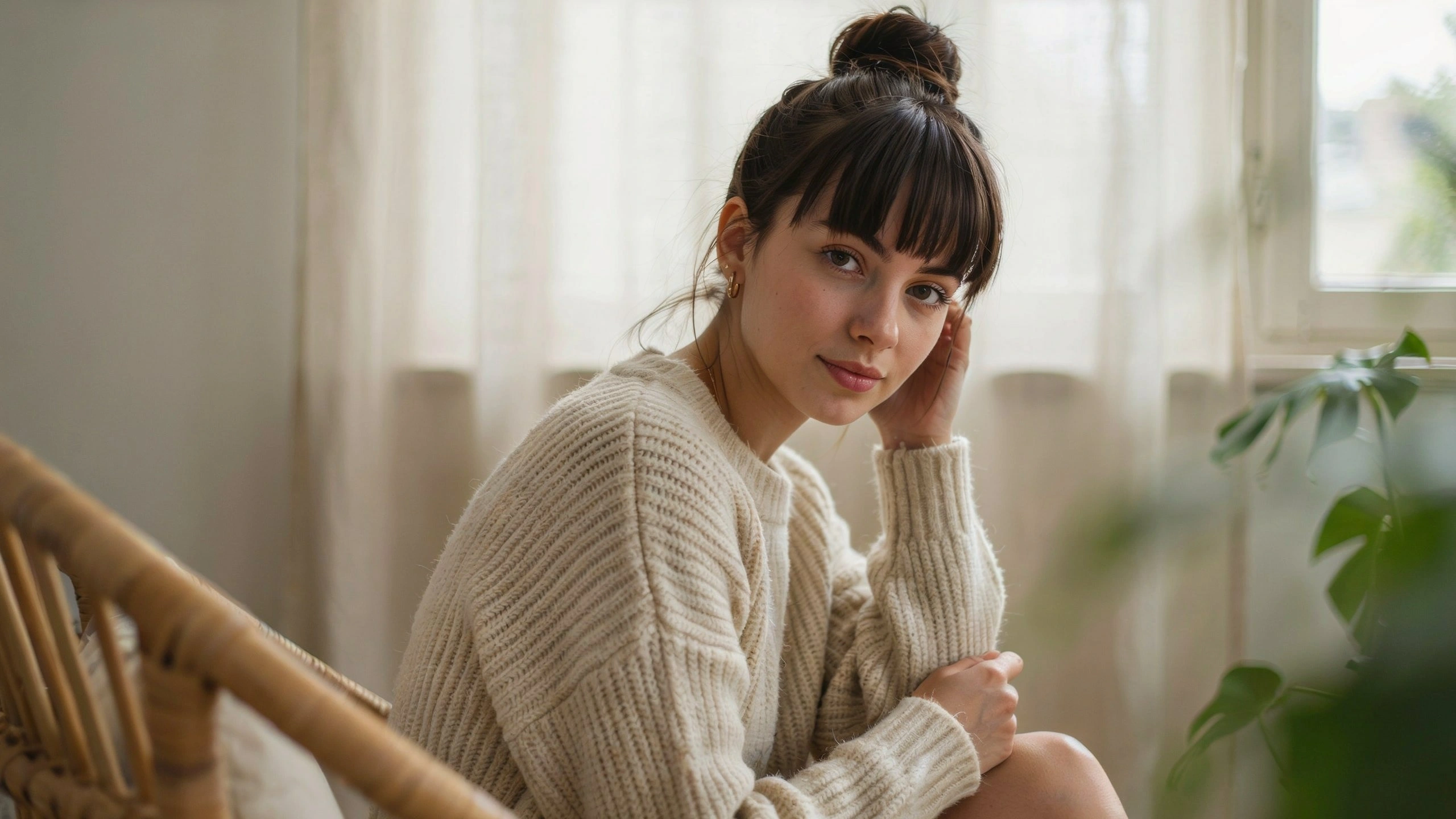
This Bun with Bangs Combination Gets More Compliments Than Any Other Updo
There is something about pulling your hair up and still having something to show for it in the front. A bun with bangs does exactly that. It gives you the clean, put together feeling of an updo while your fringe keeps the whole thing from looking like you just rolled out of bed and called it a style. Women who wear this combination tend to get asked about their hair more than they expect, which is honestly the best kind of compliment because it means it looks intentional without looking fussy.
This is not a complicated style. But it does have some nuances worth knowing, especially around face shape, bang type, and whether your particular hair texture is going to cooperate with you or fight you every step of the way.
Why This Combination Actually Flatters So Many Women
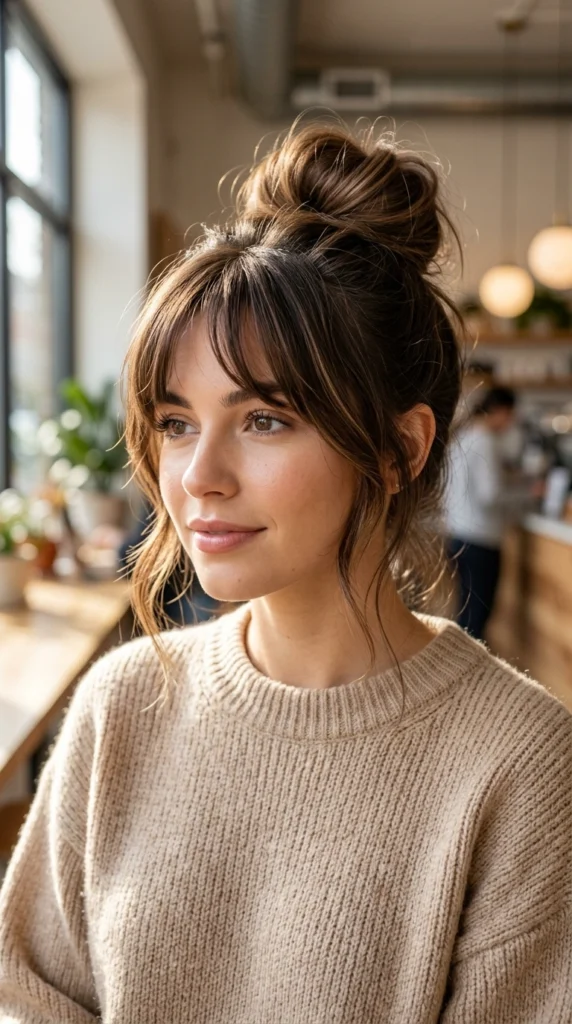
Most updos do one of two things to your face they either open it up beautifully or they expose every feature in a way that feels harsh under bright lighting. The reason a bun with bangs tends to work for such a wide range of women is that the bangs act as a softening frame. They stay forward while everything else goes back, which creates a natural balance.
If you have a longer face, a straight or slightly curved fringe across your forehead breaks the vertical line. Your face reads as more proportionate without you having to do anything structural with your hair. If you have a rounder face, a side swept bang that grazes one brow works better, because it adds a diagonal line that shifts the eye rather than mirroring the roundness. Square jaw? A wispy, textured bang softens the angles without hiding them, which is what you actually want. You want the structure of your face to show, just with a little gentleness added.
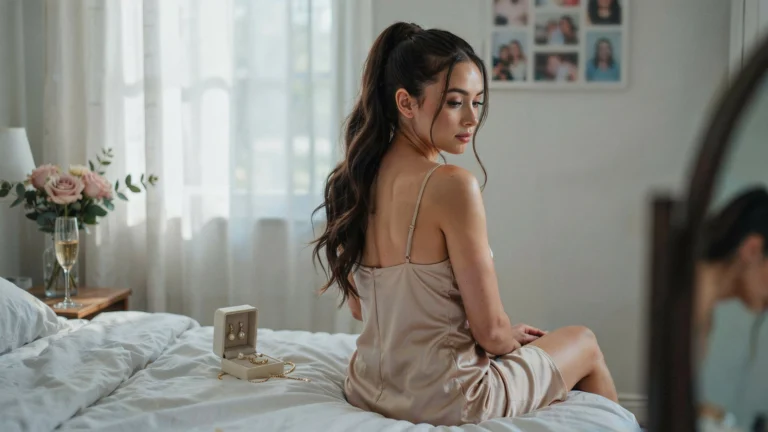
The bun itself matters too, and this is where people often stop thinking critically. A tight, high bun reads very differently than a low, loose one. A high bun with blunt bangs can feel very editorial, almost architectural. A messy low bun with curtain bangs feels more like a Saturday morning that turned into a stylish afternoon. Neither is better. They are just different moods, and knowing which one you are reaching for saves you from pinning thirty photos only to end up confused in front of your mirror.
The Bang Styles That Pair Best and Why
Not every fringe works equally well when the rest of your hair is off your face and neck. When you wear a bun, the bang becomes the visual anchor of your entire look. It carries a lot of weight. So choosing the right one for your hair type and lifestyle is actually worth thinking through carefully.
Curtain bangs have become the most requested style in this combination for good reason. They split down the middle or slightly off center and frame the face on both sides, which means they look intentional even when they are not perfectly blow dried. For wavy or slightly textured hair, curtain bangs air-dry in a way that still looks purposeful. They work with the hair instead of demanding it behave a certain way. This matters a lot if you are not someone who blow-dries every day.
Micro bangs with a bun can look stunning but require commitment. They sit high on the forehead, which exposes a lot of face, and because they are short, there is less room for error. If you are curious about them but hesitant, consider starting with a longer version before going all the way. You can always cut more. You cannot add length back.
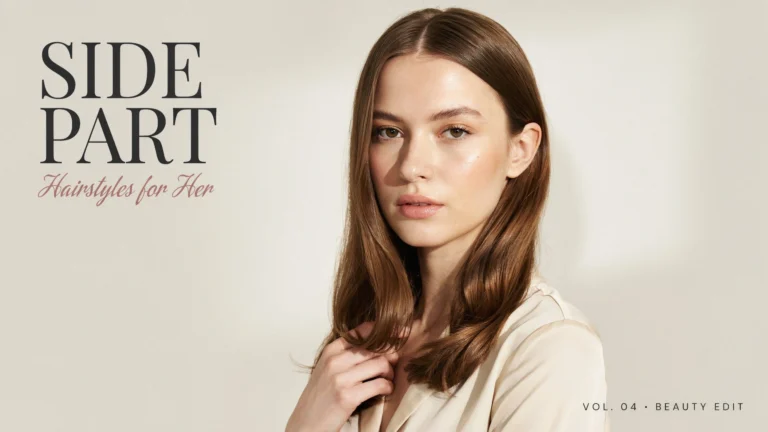
Side swept bangs are the most versatile option for women over 40 who want softness without a strong fringe presence. A side swept bang with a loose bun at the nape of the neck is one of those combinations that manages to look both relaxed and refined at the same time. It also grows out gracefully, which means you are not locked into a trim every three weeks just to keep it looking right.
Wispy, textured bangs are worth mentioning separately because they tend to suit fine hair particularly well. Fine hair can make a blunt fringe look thin at the ends, especially a few weeks after a cut. A textured, point cut bang has built in movement and softness that compensates for that. It also pairs beautifully with a bun because the lightness of the fringe matches the ease of the updo.
Getting the Bun Right for Your Hair Type
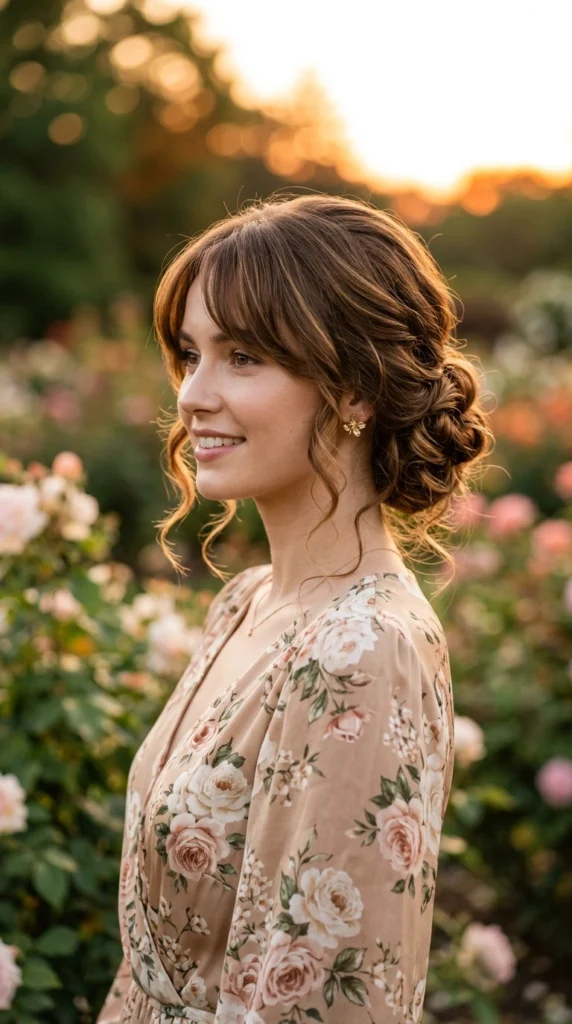
Here is where the real practical detail lives, because the actual construction of the bun varies a lot depending on your hair.
If you have thick hair, your challenge is usually volume and weight. A tight bun can look enormous at the back, which can feel heavy and out of proportion if your bangs are delicate. The trick is to twist the bun rather than wrap it, and then tuck the ends inward so the overall shape stays compact. A low or mid height bun also distributes the weight differently than a high one, which can make thick hair feel more manageable and less like a statement piece competing with your fringe.
For fine or thin hair, a bun with bangs can actually be one of the most flattering hairstyles you own, because it creates the illusion of fullness. When you gather fine hair into a bun, you are concentrating all of it into one place, which makes it look denser. The bang provides texture at the front. The trick is to tease the bun slightly or pull at it gently after securing it so it looks full rather than sparse. A small doughnut bun shaper, slipped under before you wrap, gives fine hair that rounded shape without requiring volume that is not there.
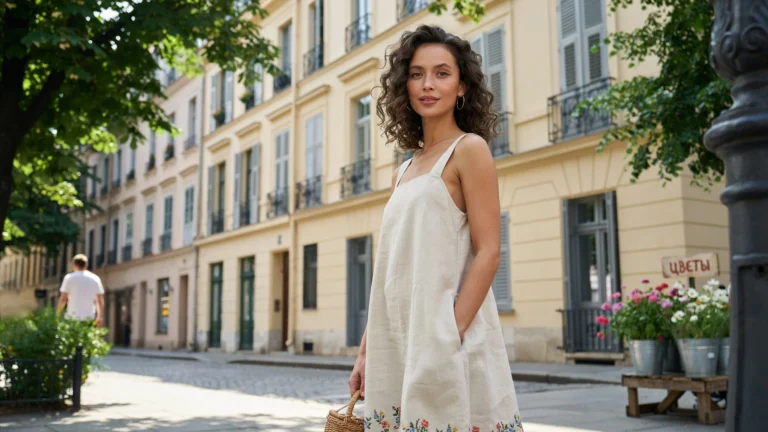
Wavy or curly hair brings a different texture equation. A wavy bun tends to have natural body and dimension, which is beautiful when the bangs are also allowed to have movement. If you have naturally wavy hair and are thinking about bangs for the first time, know that wavy bangs require more styling attention than straight ones. They tend to curl or wave in unexpected directions, particularly in humidity. Many women with wavy hair find that a side swept or curtain bang style is more forgiving than a straight across fringe, simply because the shape accounts for some natural movement.
Maintenance Realities Nobody Talks About Enough
Bangs need trimming. This sounds obvious, but the frequency catches people off guard. Most bangs start looking grown out somewhere between three and five weeks after a cut. If you can stretch to six weeks between salon visits, you will notice the fringe starting to graze your lashes or tuck behind your ears by the end of that stretch. Some people love that in between phase. Others find it maddening.
If you are someone who does not want to be at the salon constantly, curtain bangs or side swept bangs are your friends. They grow out in a more wearable way than blunt or micro bangs, which can look scraggly very quickly once they pass their ideal length. Side swept bangs, in particular, can go from fringe territory to face framing layers almost seamlessly, which gives you more flexibility between cuts.
The bun itself requires less maintenance than you might think, but it does demand that your hair be in decent condition at the back and sides. When hair lives in a bun frequently, the sections around the elastic can become fragile. Alternating bun placement helps, as does using a soft elastic rather than a tight rubber band. If you wear a bun with bangs most days, your hair at the nape and behind the ears gets very little exposure to styling tools, which can actually mean it stays in better shape than if you were blow-drying and curling it daily. The bangs take all the heat and attention. The rest of your hair rests.
Dry shampoo becomes part of the routine for most women who wear this combination regularly. The fringe sits against your forehead, which means it picks up oil faster than the rest of your hair. A light dusting of dry shampoo at the roots of the bang keeps it looking fresh on days two and three. Apply it the night before, not the morning of, and brush through it before styling. This absorbs oil overnight and gives you hair that looks like you just washed it, even when you did not.
Seasonal Considerations That Actually Change How This Look
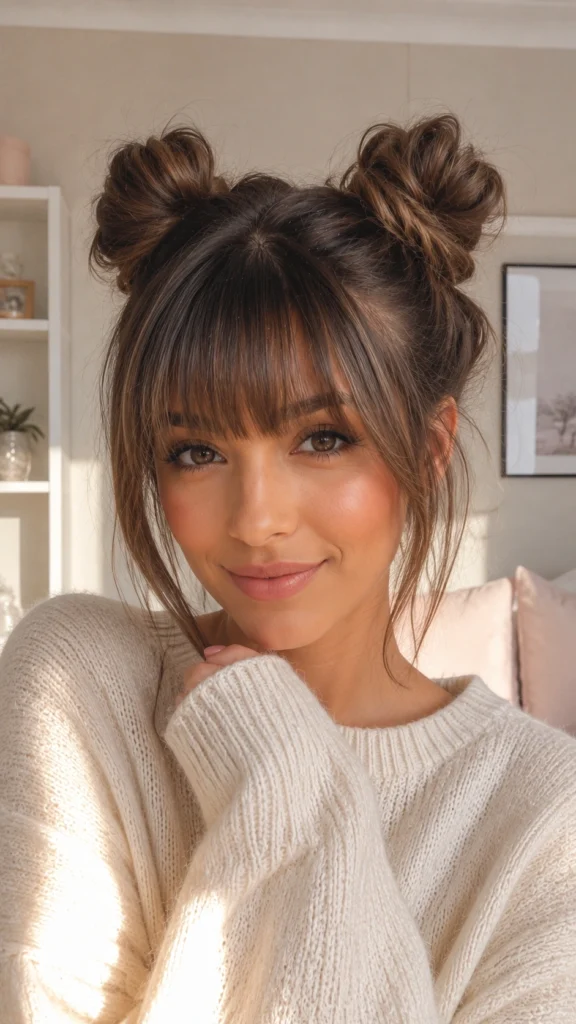
A bun with bangs shifts slightly depending on the time of year, not just because of aesthetics but because of practical factors like humidity, temperature, and how much you want your neck exposed.
In summer, this is one of the best hairstyles for warmth and heat management. The neck is completely clear, the hair is off your face, and you still have the fringe to style each morning so it does not feel like you have entirely given up. In high humidity, the bang is the part that needs the most attention. A light hold cream or a small amount of pomade worked through damp bangs before blow-drying can help them hold their shape even when the air is thick.
In winter, a low bun sitting just at or below the collar allows your coat or scarf to rest against the back of your neck without catching on a high topknot. It also works well with hats, because the bulk of the bun sits below where a hat would end, and the bangs peek out naturally from under a beanie or wool cap in a way that looks styled rather than accidental.
In autumn specifically, this combination photographs beautifully outdoors. Something about a bun with bangs against fall light, soft and golden, hits a particular aesthetic that has made it a persistent presence on inspiration boards. Not because it was styled for a photo, but because the softness of the look matches the softness of that season.