Prom Ponytail Hairstyles Stylists Actually Recommend for Formal Nights
There is something about the week before prom that turns a completely reasonable person into someone who has bookmarked forty seven hairstyle photos and still feels completely lost. You know the look you want. Something elegant but not stiff, polished but not trying too hard, something that says you put in effort without looking like you spent three hours in front of a mirror. And somehow, almost every time, prom ponytail hairstyles end up being the answer that nobody expects to love as much as they do.
The ponytail has this unfair reputation of being a backup plan. The thing you do when nothing else works. But a truly well executed prom ponytail is anything but. Done right, it shows off your neck, balances your face shape beautifully, and photographs better than most updos because it has movement. It catches light. It looks like you.
This is everything you actually need to know before prom night.
Why the Ponytail Works So Well for Formal Occasions
The first thing to understand is that the prom ponytail of today looks nothing like the cheerleader ponytail of middle school. The difference is all in the details, specifically where you place it, how you prep the hair before it goes up, and what you do with the pieces that frame your face.
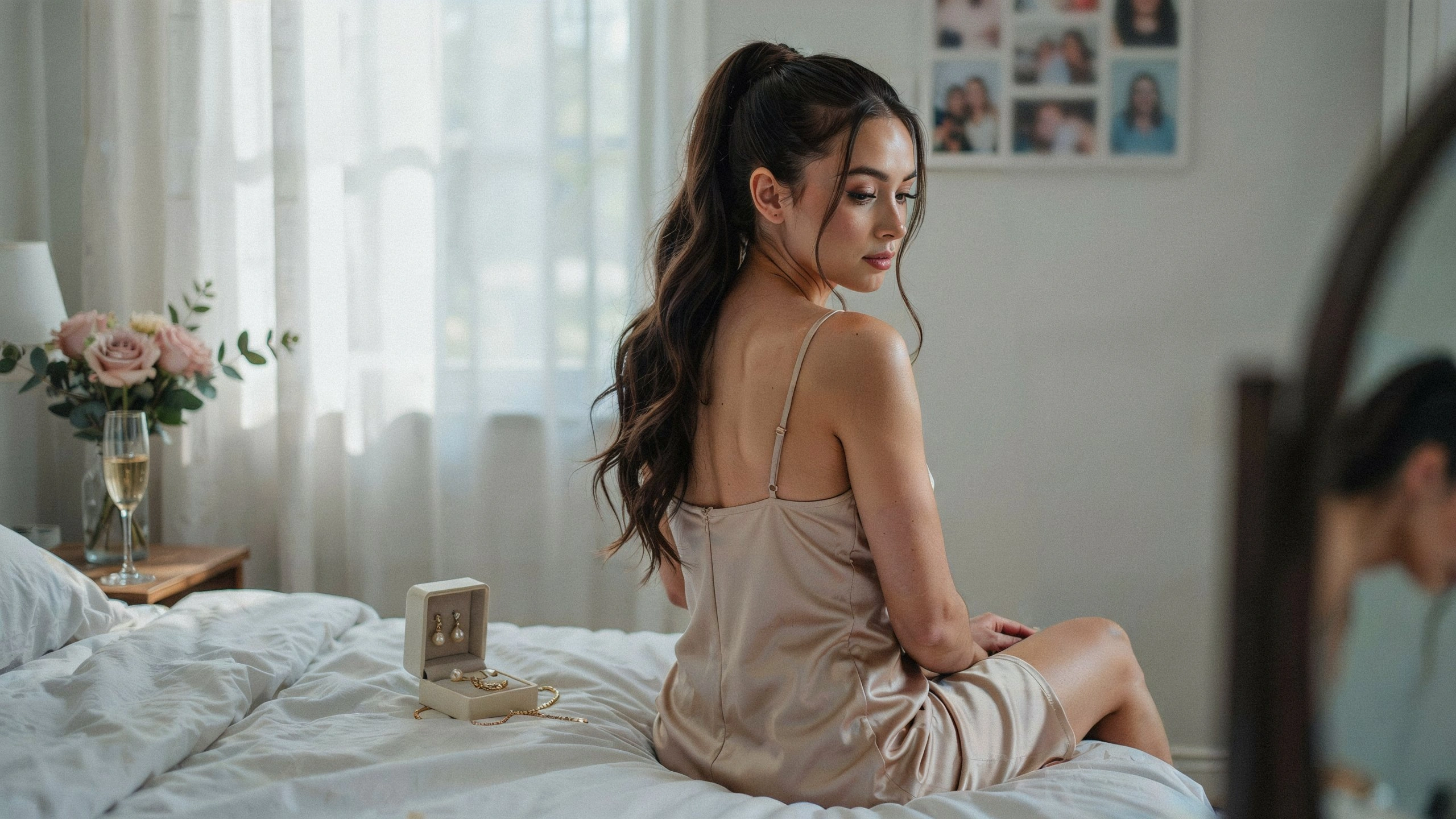
A low ponytail positioned at the nape of the neck reads as genuinely sophisticated. It sits heavily, moves with intention, and pairs beautifully with a bare shoulder neckline or an off the shoulder gown. If you have a longer neck, this placement is especially flattering because it draws the eye downward and creates a kind of graceful length from your jawline all the way to your collar.
A high ponytail, by contrast, is the choice for drama. It lifts the face, creates the illusion of height, and gives you that red carpet tension that photographs with incredible impact. The catch is that a high pony requires your hair to be genuinely smooth at the crown, which means more prep work and, honestly, more hairspray than you might be comfortable with. But when it works, it really works.
Mid height ponytails, sitting roughly at the back of the crown, are often underestimated. They are actually the most universally flattering placement for most face shapes because they lift just enough without pulling the skin tight, and they give you room to add volume at the crown before the hair ties off.
What You Do to the Hair Before It Goes Up Matters More Than the Style Itself
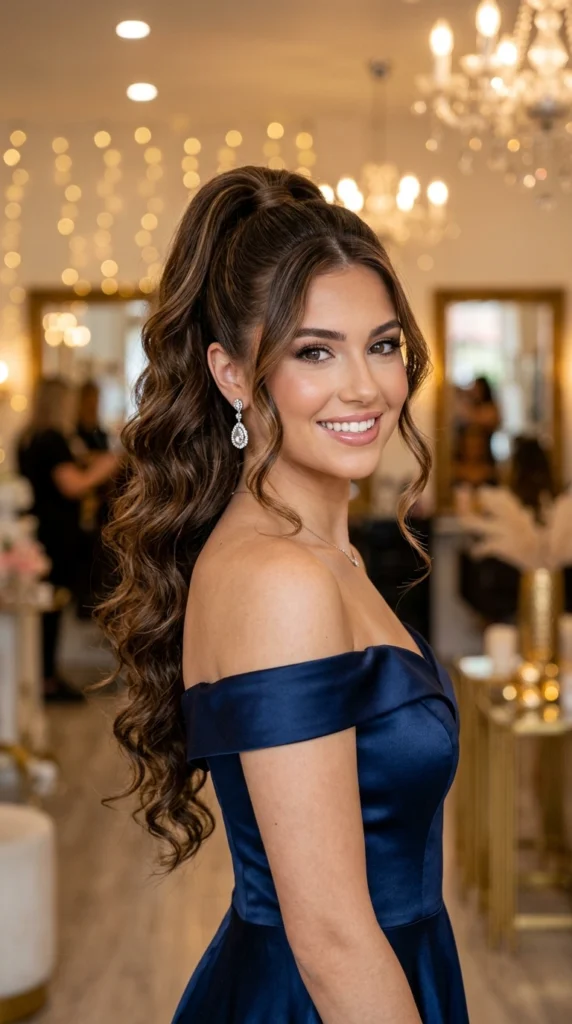
This is the part that most Pinterest images leave out. The finished look you are pinning took roughly an hour of prep underneath. The texture, the volume, the way the hair seems to have body even when it is pulled back, all of that comes from what happens before the elastic goes in.
If you have straight, fine hair, work in waves before you pull it back. Use a one inch barrel iron and curl sections away from your face, then shake them out loosely and hit them with a texturizing spray. Do not brush. Let the waves be slightly undone and imperfect. When you gather the hair into a ponytail, those waves will show through the length and give the whole style a richness that flat, straight hair simply cannot achieve on its own.
For thick or coarse hair, the challenge is usually smoothness at the root. A light application of a smoothing cream through the mid lengths before blow drying, followed by a paddle brush session to get everything moving in the same direction, will make the actual styling go ten times faster. Thick hair can carry a lot of weight in a ponytail, which means your style has incredible natural volume. Use it.
Curly hair is having a genuine moment in prom ponytail hairstyles right now, and it should. A pulled-back style that lets your natural curl pattern run free through the length is both effortless looking and genuinely show-stopping. The key is definition: refresh your curls with a curl cream or gel on the day, let them air dry or diffuse fully, then gather just the top section back while leaving the length down before you loop an elastic around the whole thing. You get the lifted structure of a ponytail with all the texture and personality of your natural hair.
The Wrap Trick Is the Only Thing Standing Between You and a Prom Ponytail That Looks Finished
Once your hair is in a ponytail, you are not done. The elastic itself is the thing most people forget to address, and it is the single detail that separates a casual ponytail from a formal one.
Take a small section of hair from the underside of your ponytail, somewhere around a quarter inch wide. Wrap it around the elastic, pulling it snug, and then pin it underneath with a bobby pin. This sounds almost too simple to matter. It absolutely matters. It is the detail that reads in photographs, that makes the back of your hairstyle look intentional from every angle, and that gives stylists a reason to charge you extra when they do it.
You can also use this moment to add something. A thin velvet ribbon wrapped over the elastic instead of hair gives a romantic, slightly vintage quality that suits tulle skirts and floral gowns perfectly. A small jeweled clip pinned over the base adds sparkle without the fuss of adding accessories throughout the length.
Face Framing Pieces Are Everything
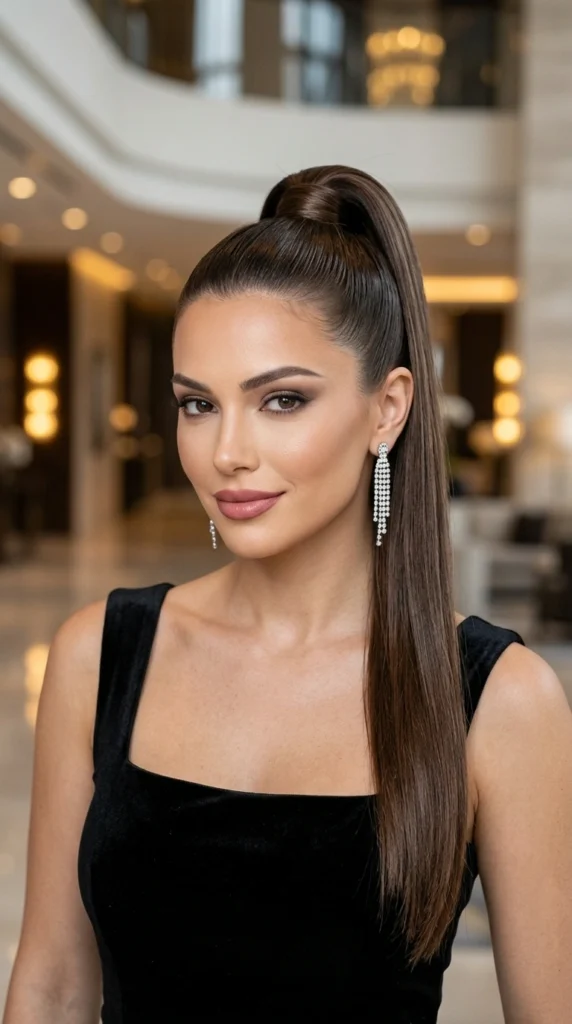
The most common mistake with prom ponytail hairstyles is pulling every single piece of hair back with military precision. This tends to look severe, and it puts enormous emphasis on your features without any softness to balance them.
Leave something out. Even two or three thin pieces pulled loose at the temples and curled gently with a small barrel iron make a significant difference. For oval and heart shaped faces, wispy pieces at the temples and some volume at the crown work beautifully together. For rounder faces, height at the top of the ponytail and minimal volume at the sides creates length and definition.
If you have a square jaw, softer waves framing the face do a lot of the visual work for you. You are not trying to hide anything, just balance the structure. For those with longer, narrower face shapes, a ponytail with some width at the sides, maybe a slight bump of volume at the crown before it pulls back, creates a sense of proportion that feels balanced rather than elongated.
Adding Length and Texture Without Making It Look Obvious
A lot of the most pinned prom ponytail hairstyles you see online are wearing extensions, and most of them are not trying to keep it a secret. Clip in extensions are genuinely accessible now, easy to blend, and can be removed the same night without any commitment.
The key to extensions that look natural is matching not just the color but the texture. If your hair has a slight wave, your extensions need to have a slight wave. If you are planning to curl your natural hair before the ponytail, curl the extensions in exactly the same pattern before you clip them in. The point at which most extensions look fake is the point where the texture changes mid-length, not where the clips are.
You can also create the illusion of thickness without extensions by simply doubling your ponytail. Put your hair into a ponytail, then take a second elastic and create a second loop just below the first, wrapping the same hair back up through. This gives the ponytail a slight lift and a bouncier silhouette without any added products or pieces.
Accessories That Actually Look Good and Not Like an Afterthought
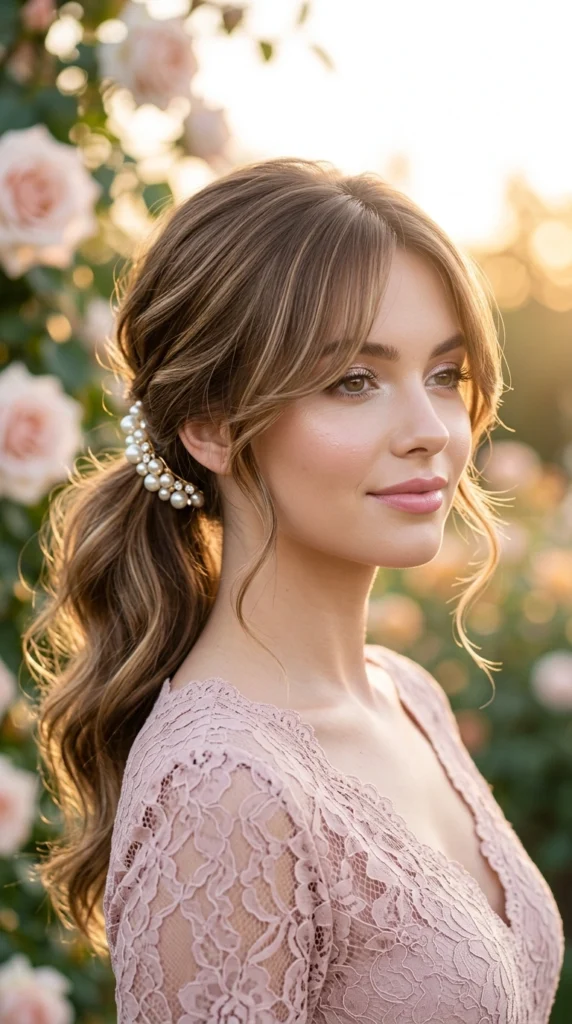
There is a version of prom ponytail hairstyles that involves an entire headband, three butterfly clips, and what appears to be a small chandelier hanging from the elastic. That version is a lot. There is also a version where someone remembered accessories existed two minutes before leaving and grabbed whatever was on the counter.
Neither is what you want.
The accessories that work best with a ponytail tend to be singular and placed with intention. A pearl pin tucked into the base of the ponytail. A single gold cuff slid onto the length about three inches from the elastic. A thin rhinestone headband that keeps the face framing pieces in place while adding something formal to the front of the style.
If your gown is heavily embellished, the smartest thing to do is keep the hair simple. One or two metal pins is enough. If your dress is a cleaner silhouette, you have more room to let the hair do some of the decorative work.
The Morning of What to Actually Do
Start with clean hair, but not day of clean. Hair washed twelve to twenty four hours before styling holds texture better, takes curl more easily, and does not slide out of elastics the way freshly washed hair tends to. If that timing does not work for you, use a dry shampoo at the roots after washing to rough up the texture a little.
Do your waves or prep work before everything else, including makeup, because heat tools near a finished face tend to cause sweating and product migration. Get the hair in place first, then sit down for makeup.
Bring a small kit with you to the venue: a travel size hairspray, two or three extra bobby pins in your shade, and a small section of your own hair or a similar shade thread to replace a wrap if it shifts. You will probably not need any of it. But the night you feel truly confident in your hairstyle is the night you came prepared.
A Last Thought on the Whole Thing
Prom is one of those nights where it is tempting to become someone you are not, hair included. You see a hairstyle on someone who has completely different hair from you, different bone structure, different coloring, and you want to will yourself into looking exactly like that image. Sometimes it works. More often, the best version of a prom ponytail is the one built around your actual hair and your actual face.